Bringing the lived experience of liver disease to life through immersive design
08 January 2026
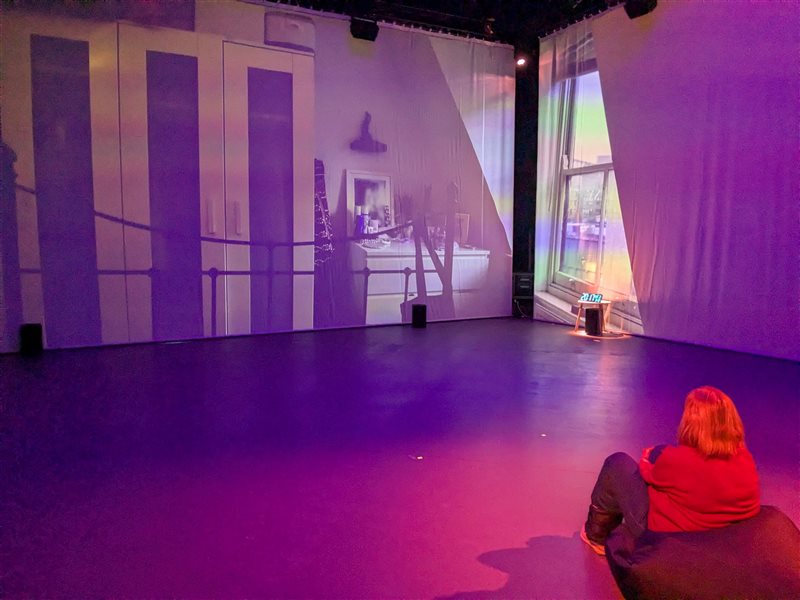
What does liver disease actually feel like to live with?
It’s a question stats, scans and clinical scores often struggle to answer. But for millions of people living with MASLD (metabolic dysfunction-associated steatotic liver disease), the condition shapes everyday life in ways that are difficult to describe and easy for others to overlook.
A new public engagement project led by Dr Anna Hadjihambi, UKRI Future Leaders Fellow at the Roger Williams Institute of Liver Studies, is setting out to change that. Working in collaboration with Dr Sara Adhitya, Director of ASPIRE (the Arts-Sciences programme at PEARL, University College London), the project is using immersive, multisensory design to help people actually experience aspects of what it feels like to live with liver disease, rather than simply learning about it.
Supported by the UKRI Future Leaders Fellowship Development Network and UCL's Department of Civil, Environmental and Geomatic Engineering, the project brings together neuroscientists, historians, clinicians, creatives and patients to explore how sound, light, film, smell and touch can be used to communicate the hidden impacts of MASLD.
A common disease with invisible consequences
MASLD is now the most prevalent liver disease in history, affecting a staggering 30 percent of adults worldwide. Closely linked to modern lifestyles and metabolic health, it's often perceived as a silent or early-stage condition.
But growing evidence tells a different story. Up to 70 percent of people with MASLD experience changes in brain function, including problems with memory, attention and concentration. Many also report fatigue, anxiety, low mood and a general sense of cognitive fog. These effects can undermine quality of life long before severe liver damage is diagnosed.
Because the symptoms are subtle, fluctuating and hard to articulate, they’re often underestimated and misunderstood. That's why one of the central aims of Dr Hadjihambi’s project is to make those experiences more visible – not just through data, but through the power of the senses.
Where the idea began
The project is part of a wider collaboration between Dr Hadjihambi and Dr Christina Anderson, a historian at UCL, who are both exploring ways to engage the public as part of their UKRI Future Leaders Fellowships.
Their collaboration was inspired by research into how humans perceive the world through multiple senses at once, and by first-hand experience of PEARL’s Empathy Machine. Co-created by Dr Adhitya and Antonia Attwood, Artistic Director of Creative Health Camden, the Empathy Machine is an immersive installation that simulates aspects of living with chronic illness. Immersive, multisensory tools like these are a core research theme within PEARL’s Arts-Sciences Programme.
Seeing how complex physical and emotional states could be recreated and felt within a laboratory setting prompted the team to rethink what meaningful public engagement could look like. Rather than telling audiences what liver disease is, the aim became to invite them to step inside and feel what it’s like to live with a condition like MASLD.
Phase 1: co-creating the experience
The first phase of the project took place in October at PEARL (UCL’s purpose-built centre for studying person-environment interactions). To help build the creative brief, the team brought together a diverse group of contributors.
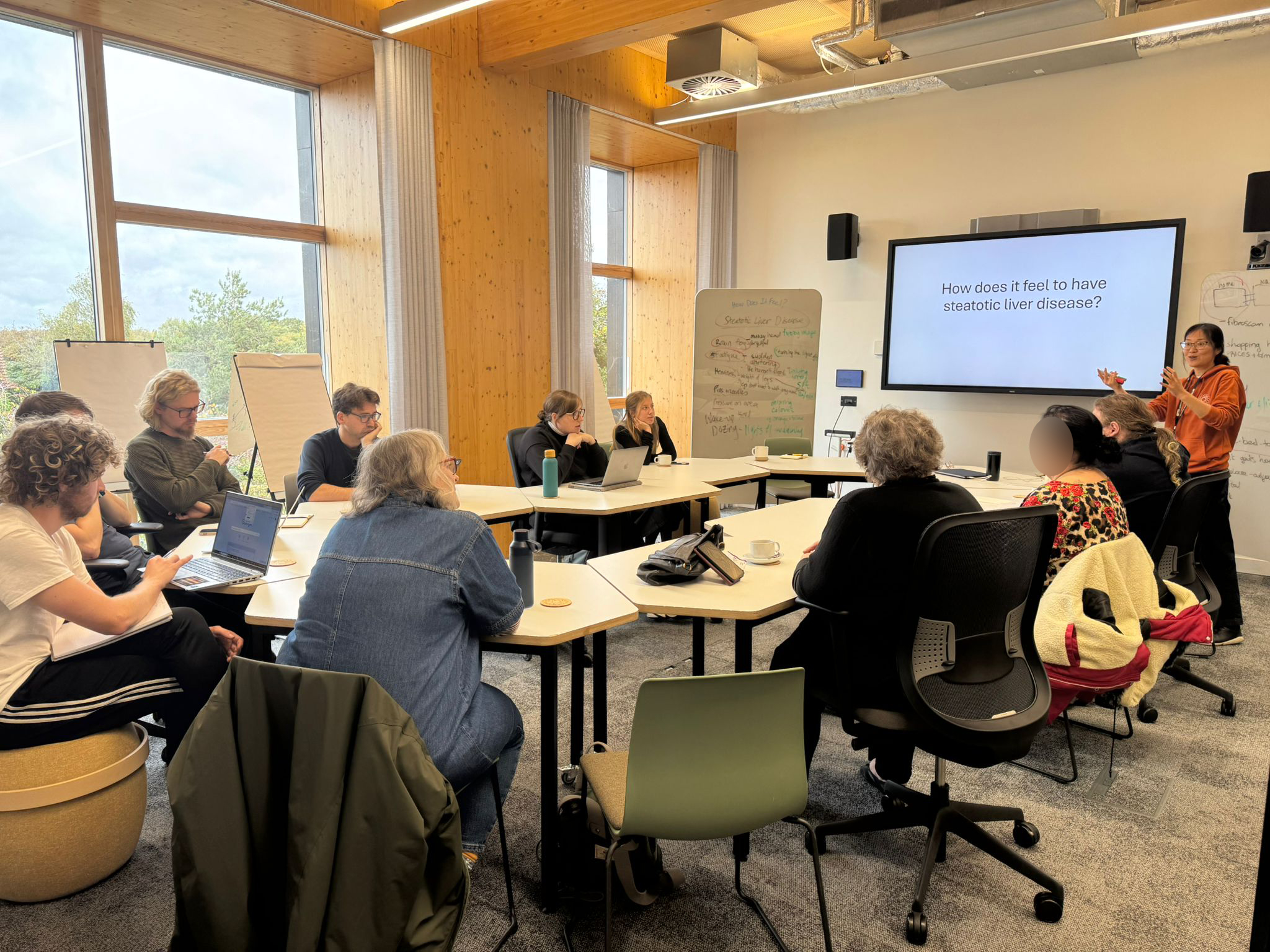
Phase one workshop at PEARL, UCL, where patients helped shape the project alongside scientists and creatives.
Participants included liver clinicians, cognitive neuroscientists, sensory researchers, filmmakers, sound and experience designers, healthcare professionals and real patients affected by MASLD. The goal was to understand which symptoms and sensations mattered most, and how they might be translated to the public.
Discussions focused on experiences such as fatigue, mental overload, anxiety and disorientation, and how these shape daily life across different stages of the disease. Working closely with PEARL’s technical team, participants then explored how these states could be recreated using combinations of sound, light, moving images, smell and tactile cues within PEARL’s immersive environment.
Phase 2: testing and refining prototypes
After the first workshop, Dr Adhitya led a team of creative practitioners and PEARL technicians towards the development of visual, lighting, sound, smell and haptic sensory prototypes based on the ideas from phase one. These were then brought together as a cohesive multisensorial experience at PEARL in December for the second phase of the project.
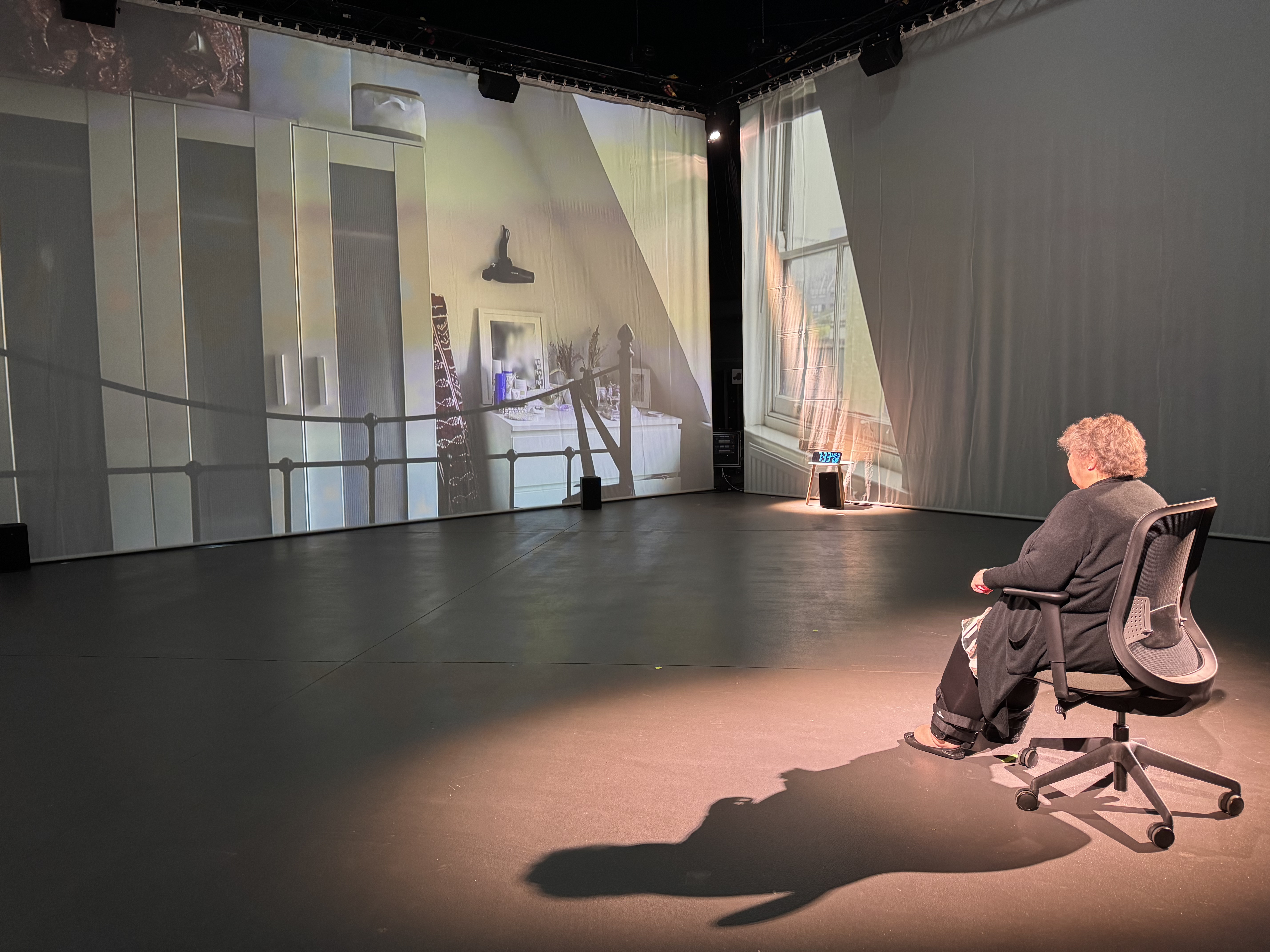
A patient tests an early multisensory prototype, helping refine how liver disease symptoms are experienced and understood.
Participants returned to experience and test the prototypes in situ. They discussed what felt authentic, what was too subtle or too intense, and how well the different sensory elements brought the symptoms of MASLD to life.
Patients’ and clinicians’ feedback was vital, helping the team to adjust pacing, intensity and sensory combinations, strengthening both the emotional impact and accuracy of the experience.
Building something bigger
Although still at an early stage, the project has already demonstrated the potential of immersive approaches and lived experience to deepen understanding of liver disease.
Early versions of the simulation were shared with the public at The Empathy Machine: Chronic Illness event at PEARL on December 5th, where Dr Saima Ajaz from the Roger Williams Institute of Liver Studies represented the project. The event brought people from a wide range of disciplines together, to explore how immersive experiences could help people understand other chronic conditions, like psoriatic arthritis and inflammatory bowel disease.
The goal now is to develop a larger-scale immersive experience for museums, public health campaigns, education and community settings. In the longer term, the methods developed here could also inform research into patient experience, communication in healthcare settings and how empathy shapes care and outcomes.
Why this matters
Chronic diseases like MASLD don’t just exist in test results. They’re lived by millions of people around the world, but the realities are often invisible to everyone else.
By helping people to quite literally step into someone else’s shoes, this project offers a new way to understand liver disease that recognises how health, history and society are deeply interconnected.
Liver disease has long been difficult to see. Through immersive design, Dr Hadjihambi, Dr Adhitya and Dr Anderson are helping to make it felt.

“Many of the brain-related symptoms associated with MASLD are subtle, hard to describe and often overlooked. By working directly with people who live with the condition, we are trying to move beyond clinical labels and capture what daily life actually feels like.”
– Dr Anna Hadjihambi, co-lead researcher at the Roger Williams Institute of Liver Studies
“By bringing researchers, creatives and people with lived experience into the same space, immersive methods can completely change how we understand chronic illness across healthcare and society.”
– Dr Sara Adhitya, Director of ASPIRE at PEARL, University College London
“This project is about empathy and connection. By using immersive experiences, we can help people step into lives that are very different from their own, whether it's someone living with liver-related brain dysfunction today, or people whose experiences have been marginalised or erased from history.”
– Dr Christina Anderson, co-lead researcher at University College London
Go behind the scenes of the project's second phase, in the clip below:
With special thanks to:
All patient representatives
Dr Saima Ajaz, at the Roger Williams Institute of Liver Studies
UCL's Department of Civil, Environmental and Geomatic Engineering
The UKRI Future Leaders Fellows Development Network
Creative Director: Sara Adhitya
Visuals: Antonia Attwood
Sound: Ben Paveley
Lighting: Shane Gill
Scent and props: Matthew Vile
Documentation: Ralph Stokeld
PEARL for their additional in kind support
Read other news articles